


Exceptional Pre-War Jewels to Grace the Concours of Elegance Germany
From a Rolls-Royce with a royal connection to an Alfa Romeo that raced the Mille Miglia, four remarkable pre-war automobiles will take centre stage at this year’s Concours of Elegance Germany at Tegernsee. Each is a testament to the extraordinary craft and ambition of what is, for many, motoring’s ‘golden age’.
1927 Rolls-Royce Phantom I Open Tourer by Barker
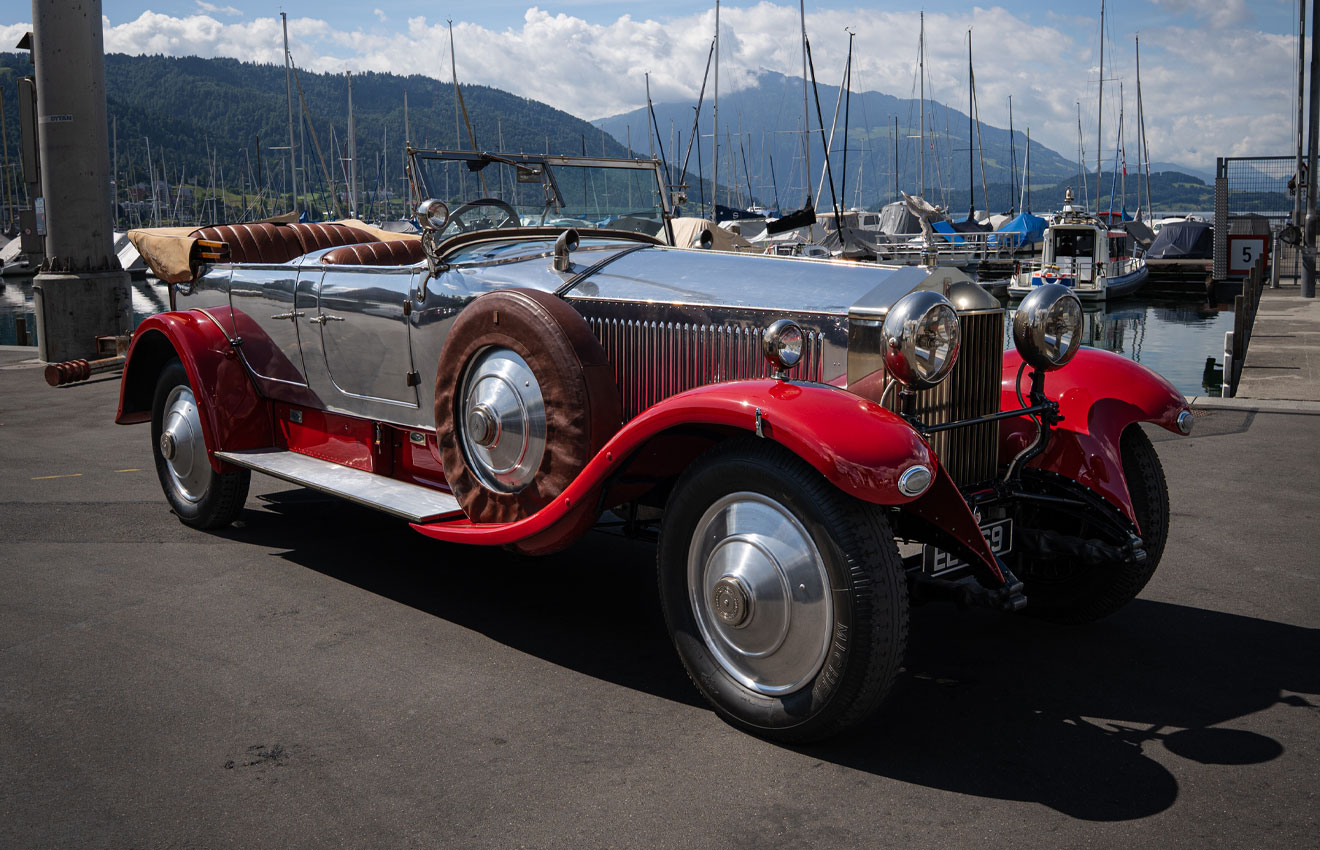
The 1927 Rolls-Royce New Phantom, chassis 75LF, is an outstanding example of Barker’s open-tourer design, completed and dispatched to India in August 1927 on the marque’s advanced 7.7-litre six-cylinder chassis. Early documentation links it with C. E. Randle, founding general manager of the Bank of Baroda, who placed the order either for him or on behalf of the Maharaja Sayajirao Gaekwad III. Later records link the Phantom to the renowned physicist S. N. Bose before it continued its life in Calcutta, eventually passing to a noted collector. In 1966, the car undertook an extraordinary 7,500-mile journey from India to London via the Khyber Pass and Kabul – a remarkable episode preserved in period photographs. Subsequent refinishing included a polished aluminium and red livery, and the car later appeared in Billy Idol’s 1982 White Wedding music video. Imported to Switzerland in the late 20th century, 75LF has since benefited from careful preservation and sympathetic restoration. Its history from 1927 to its most recent sale in 2021 remains fully documented and unusually rich in character.
1928 Bentley 4½ Litre Open Tourer by Van den Plas
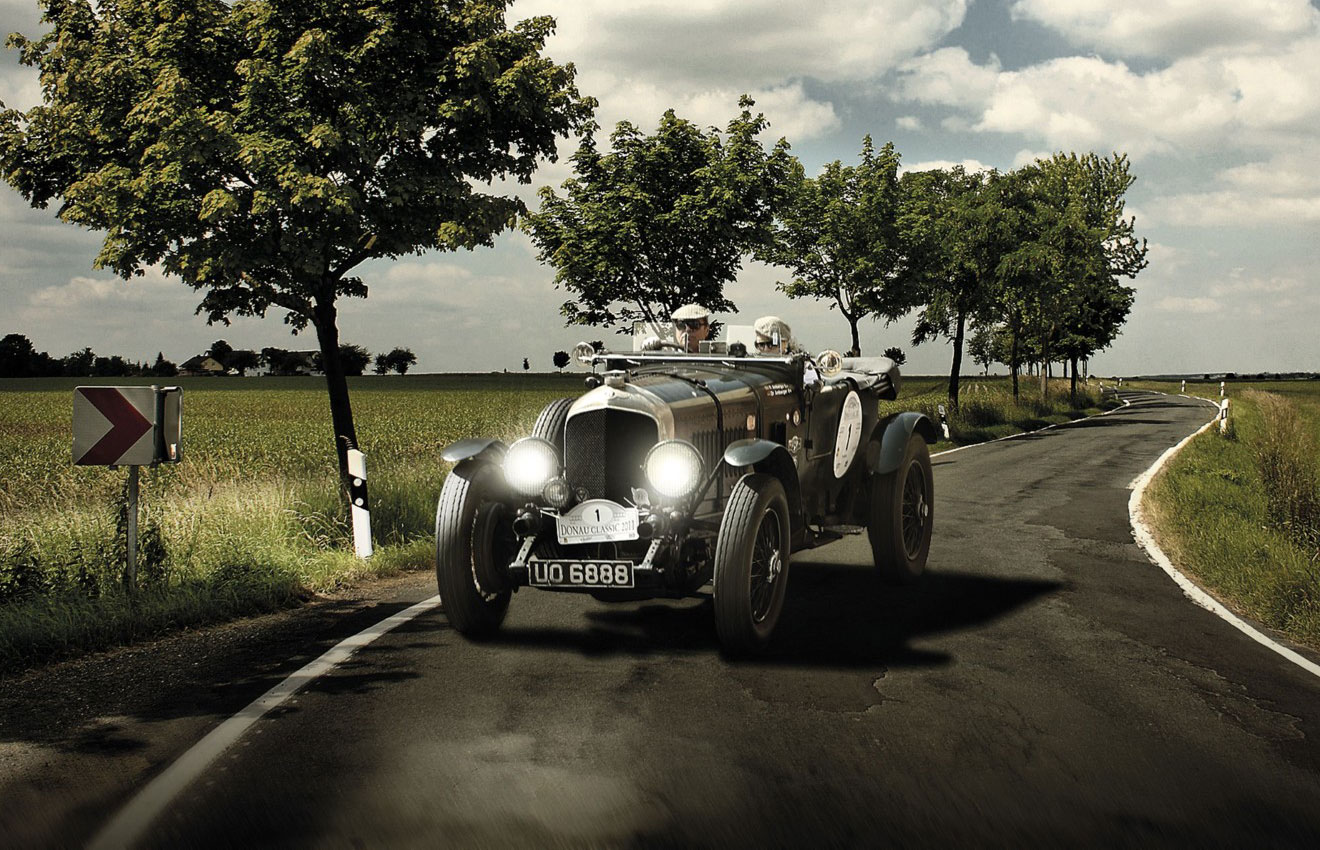
A British racing icon: the Bentley 4½ Litre, introduced in 1927, embodies the golden age of British motorsport. It was developed by company founder W. O. Bentley as a powerful successor to the ageing 3-Litre Bentley. Technically, the new four-cylinder engine was derived from the large 6½-Litre unit – effectively a “halved” version of that design. The 4,398 cc engine, with an overhead camshaft, four valves per cylinder and twin SU carburettors, was regarded as exceptionally robust and torque-rich, engineered to withstand endurance racing’s extreme demands. It is no surprise that it became the legendary “Bentley Boys” preferred choice – those wealthy British gentleman-drivers whose courage, nonchalance and considerable means helped shape the marque’s mythology. It achieved its greatest triumph in 1928: securing overall victory at the 24 Hours of Le Mans. Between 1927 and 1931, a total of 670 naturally aspirated examples were built, complemented by 50 factory-supercharged “Blower” models.
1930 Aston Martin International 1.5-Litre
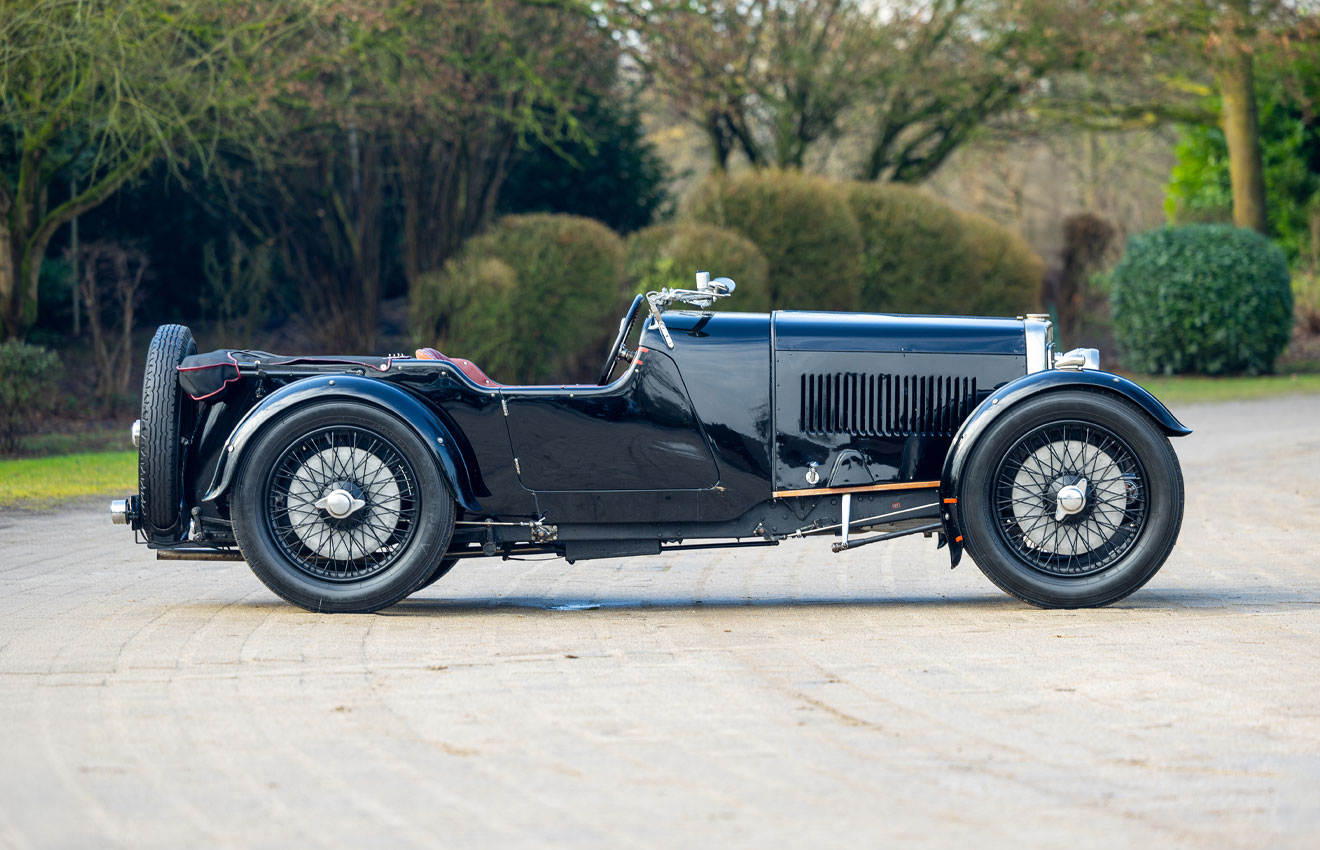
The International model marked Aston Martin’s transformation from fragile boutique maker to credible sporting marque, its in-house-engineered, low-slung chassis and dry-sump 1.5-litre SOHC engine forming the basis of a lightweight, capable and commercially important sporting car. Produced in limited numbers between 1929 and 1932 – only 133 First Series examples were constructed – it combined long-stroke torque, dual SU carburettors, semi-elliptical leaf springs, four-wheel drum brakes and typically steering-linked cycle wings to deliver agility and durability across British trials and hill climbs.
Chassis S73 was delivered new in England in 1930, finished in its original black and red scheme, which it retains today. Particularly significant is the survival of its original Aston Martin-built 2/4-seat Roadster body from Feltham, a rarity among pre-war sporting Astons, many of which were later rebodied or altered. Its first owner served in the King’s Own Royal Regiment, followed by a succession of British custodians, including long-term owner Peter Jepson, under whose care a five-year restoration took place. Imported to Germany in 2005, it underwent a further comprehensive restoration by ROOS Engineering and Ecurie Bertelli between 2007 and 2011. Today, it remains an unusually authentic and well-documented example of Aston Martin’s influential early sporting lineage.
1931 Alfa Romeo 6C 1750 Gran Sport Spider
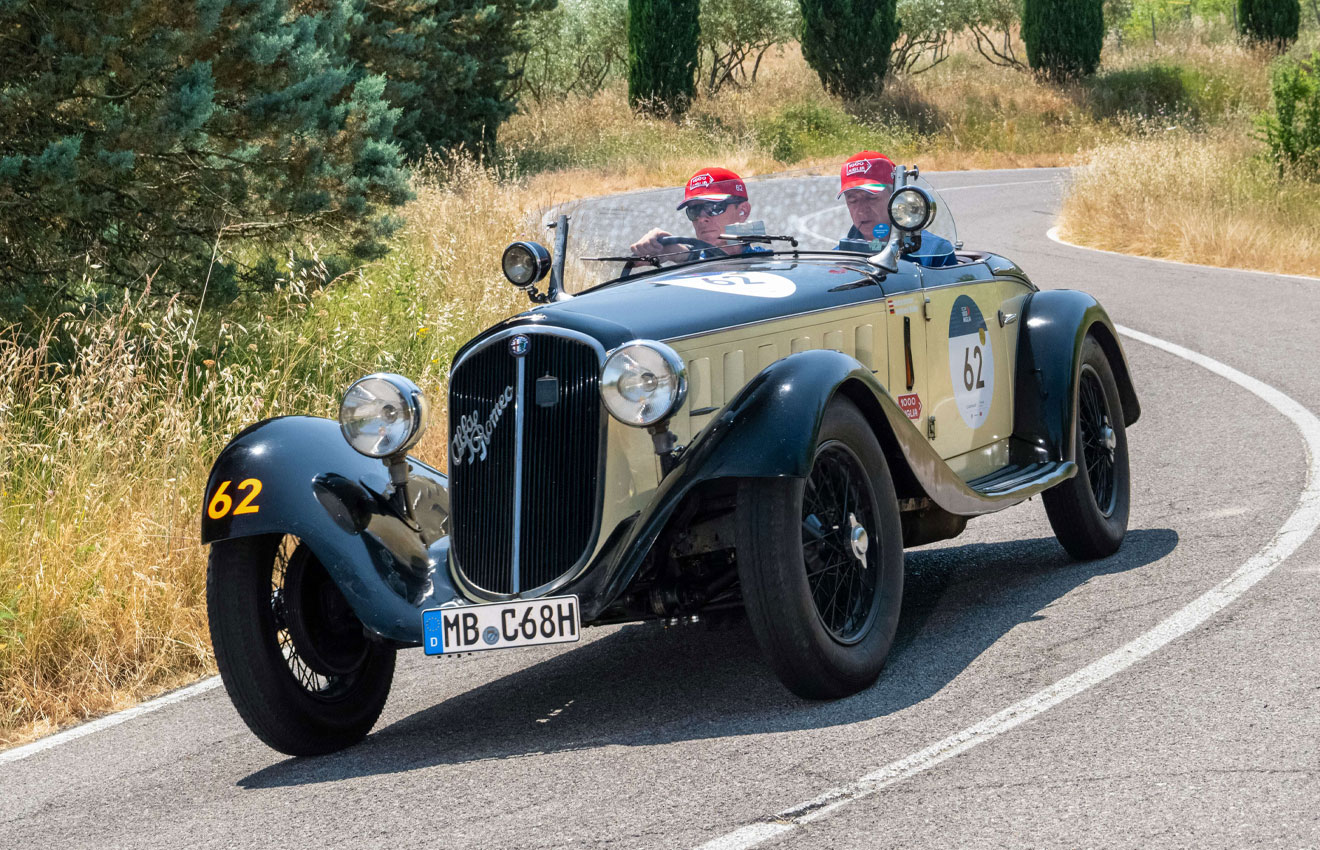
The 1931 Alfa Romeo 6C 1750 GS Zagato Spider/Touring Sperimentale (AR 6C10814326) is one of approximately five factory-prepared cars for the 1931 Mille Miglia and is among the most original and best-documented fifth-series 6C 1750 Grand Sports. Delivered new with a lightweight Zagato Spider body intended for competition, it received its Certificato d’Origine on 8 April 1931 and was sold the same day to Umberto Gerardi, whose family had raced earlier Alfa Romeos. Several owners later, by the mid-1930s it had been rebodied by Carrozzeria Touring with an expensive one-off design featuring rotating bonnet air ducts, a fully retractable soft top, an inset spare wheel and a notably low seating position. This unique construction earned the chassis the designation Sperimentale. Ownership is fully documented from 1931 to today: spending most of its life in Italy, the car came to Germany in 2012. It is believed to have raced several times, most notably – and confirmed by photographic archives – in the Mille Miglia 1931, finishing 5th. Remarkably, the car survives in largely unrestored and highly original condition, retaining details such as its headlamp lenses, mirrors and dashboard instruments.
These four extraordinary machines will be displayed alongside the wider field at the Concours of Elegance Germany at Tegernsee. Further details at concoursofelegancegermany.com